Prepare Your Child for School Admissions in Kolkata
30 Jul, 2026


For most parents, the first school application feels like more than a paperwork exercise. The city's education landscape has grown increasingly competitive, and school admissions in Kolkata now require parents to plan ahead, prepare documentation early, and most importantly, prepare their child for the experience. This guide covers the essentials without overcomplicating the process.
Most reputed schools in Kolkata open registrations between August to March for the following academic year. For nursery admission in Kolkata, children typically need to be at least 3 years old by 1st April of the admission year. For Class 1, the minimum age is usually 6 years.
Documents commonly required:
Begin researching schools early. Attending open houses and speaking to current parents gives you a far clearer picture than online rankings alone.
Children who start school with emotional and social readiness settle in faster and build a healthier relationship with learning. At this stage, schools are not looking for academic achievement. They are looking for school readiness: can the child communicate, follow simple instructions, and spend a few hours away from a parent without distress? Confidence building and emotional readiness matter far more than whether a child can recite the alphabet in sequence.
Have regular conversations where your child answers in full sentences. Read books together and ask open-ended questions. When a child can express themselves clearly, they handle admission interactions with far greater ease.
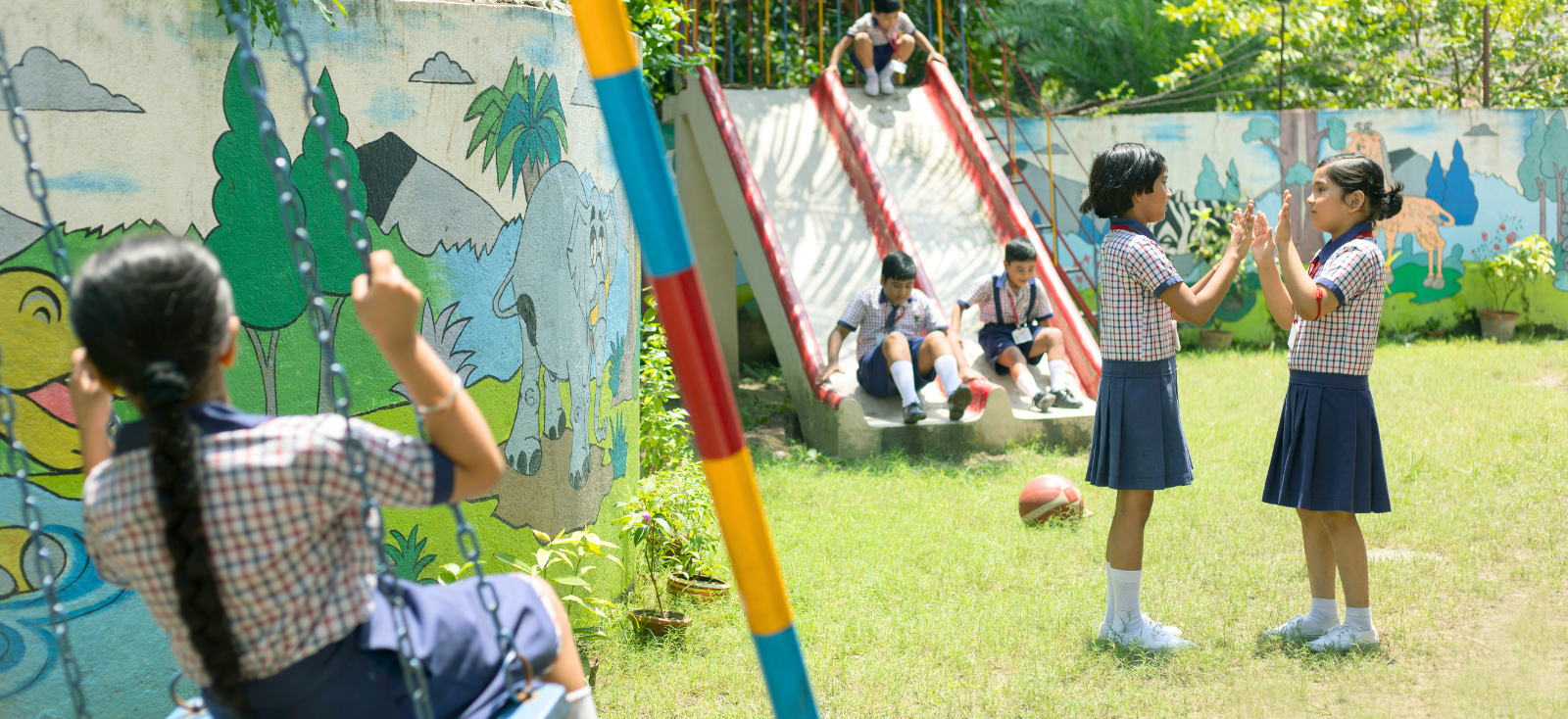
Arrange playdates or activity classes where your child interacts with peers. Children who can share, take turns, and navigate minor disagreements demonstrate strong child development and social readiness that schools observe closely.
A school-like timetable introduced months before admission helps children adapt to structured days without anxiety. Consistent wake times, meals, and activity periods create the kind of discipline that makes classroom life feel familiar.
Simple games like Simon Says or basic board games improve attention span and the ability to follow two-step instructions. This demonstrates that a child can function in a group environment without constant individual attention.
Early learning at this age means play: sorting shapes, drawing freely, singing rhymes, and exploring textures. These activities build fine motor skills and language simultaneously. Schools assess curiosity and engagement, not memorisation.
Encourage your child to hang up their bag, open their lunchbox, and wash their hands independently. These small acts of independence reduce first-day anxiety and signal developmental readiness to teachers.
Name emotions openly at home. Children who understand their own feelings handle new environments with more resilience. Confidence building is about teaching children that they can manage new challenges, not that everything will be easy.
Take your child to libraries, museums, or children's workshops regularly. Each new experience teaches them that unfamiliar places can be interesting. Your own calm attitude before a school visit directly affects how your child approaches it.
Many schools observe parent and child together in an informal session. Schools are watching communication warmth, not rehearsed answers. A child who feels secure with their parent engages far more naturally than one who has been coached.
A child who engages with their surroundings, sustains interest in activities, and relates well to others is far better prepared than one who has memorised numbers to 100. Trust the process and invest in your child's broader growth.
If you are searching for a top ICSE school in Kolkata or an ICSE school near me, look beyond rankings. Key factors to evaluate:
A campus visit tells you more than any list. Trust your instincts about whether the environment genuinely suits your child.
School admissions in Kolkata can feel overwhelming, but the process becomes manageable when parents focus on what genuinely matters: preparing a confident, curious, and emotionally ready child rather than chasing a performance. Holistic preparation across social, emotional, and developmental dimensions gives your child a far stronger academic foundation than any last-minute drilling.
Choose a school that values your child as a whole person and welcomes you as a partner in their education. That parent-school partnership, built from day one, is where the real difference is made.
From Classroom to Career: How School Education Shapes Future Succe...
Introduction: More Than Just Report Cards P...
How Parents and Schools Can Build Self-Confidence in Children...
How the ICSE Curriculum Builds Strong Conceptual Foundations from...